
Services
Start with the problem, not the stack
Most teams come to us with one of four problems. Pick yours — each links to the specific services, case studies, and pricing that apply.
Launch a new product
You have an idea, a deadline, and no engineering team yet.
MVPs, SaaS platforms, web applications, and mobile apps — scoped tightly, built in two-week sprints, and shipped to real users.
- MVP & product discovery
- SaaS platforms
- Web applications
- iOS & Android apps
Modernize an existing system
Your software works, but it is slow to change, costly to run, or hard to hire for.
Architecture reviews, API rebuilds, and cloud migrations delivered in phases, so the business stays live while the system improves.
- Legacy modernisation
- APIs & integrations
- Cloud migration
- Architecture reviews
Add AI to your product
You want AI features that hold up in production, not a demo that breaks on real data.
LLM integrations, retrieval-augmented generation (RAG), AI agents, copilots, and document automation — with cost controls and guardrails.
- LLM integration
- RAG & document intelligence
- AI agents & automation
- AI copilots
Scale your engineering
Your roadmap is bigger than your team.
Dedicated engineers and small product teams from Lahore who join your cadence, your tools, and your code review.
- Dedicated engineers
- Product teams
- Fractional CTO
- Ongoing product development
All services
Specialist pages for the stacks and capabilities teams ask us about most.
Launch a new product
SaaS Development
Multi-tenant SaaS products with subscription billing, admin panels, analytics, and the integrations your customers expect.
- Next.js
- Node.js
- Django
- Stripe
Custom Software Development
Web platforms and internal tools built around how your business actually works, instead of bending it to an off-the-shelf product.
- React
- Node.js
- Python
- PostgreSQL
Mobile App Development
iOS and Android apps from one React Native codebase, including the backend, store submission, and post-launch updates.
- React Native
- Expo
- iOS
- Android
MERN Stack Development
React and Node.js web applications with MongoDB — real-time features, REST or GraphQL APIs, and admin dashboards.
- React
- Node.js
- Express
- MongoDB
React Native Development
Cross-platform apps with offline support, push notifications, maps, and device features — tested on real devices every sprint.
- React Native
- Expo
- TypeScript
- Firebase
Modernize an existing system
Architecture & Legacy Modernisation
Architecture audits, phased migration of monoliths, and fractional CTO support for teams that need senior technical judgement.
- System Design
- Microservices
- Terraform
Cloud & DevOps
Cloud migration, containerised deployments, CI/CD pipelines, and monitoring on AWS, GCP, or Azure.
- AWS
- Docker
- GitHub Actions
- Grafana
Process Automation & Modernisation
Replacing spreadsheets, paper workflows, and disconnected tools with one system your team will actually use.
- Workflow Automation
- Integrations
- ERP/CRM
Python, Django & FastAPI
Django platforms, FastAPI services, background jobs, and data pipelines — the backend for web apps and AI products alike.
- Python
- Django
- FastAPI
- Celery
MEAN Stack Development
TypeScript-first Angular and Node.js applications for teams that want strong structure across a large codebase.
- Angular
- NestJS
- TypeScript
- MongoDB
Add AI to your product
Generative AI & LLM Integration
Chat assistants, RAG over your documents, content generation, and AI agents that call your APIs — with evaluation and cost controls.
- OpenAI
- Claude
- RAG
- Vector DBs
AI Product Development
From use-case validation to a production AI feature: we check AI is the right tool, prototype quickly, then harden it.
- Python
- OpenAI
- LangChain
- FastAPI
Machine Learning Engineering
Classification, forecasting, computer vision, and model serving — deployed as monitored APIs, not notebooks.
- PyTorch
- TensorFlow
- scikit-learn
- FastAPI
Scale your engineering
Dedicated Development Team
Senior engineers from our Lahore team embedded in your roadmap, tools, and review process — scaled up or down as you need.
- Full-stack
- Mobile
- AI
- DevOps
Architecture & Legacy Modernisation
Architecture audits, phased migration of monoliths, and fractional CTO support for teams that need senior technical judgement.
- System Design
- Microservices
- Terraform
Not sure which fits? Guidance for founders · Guidance for established businesses
Proof
Services in practice
How these services came together on real products.
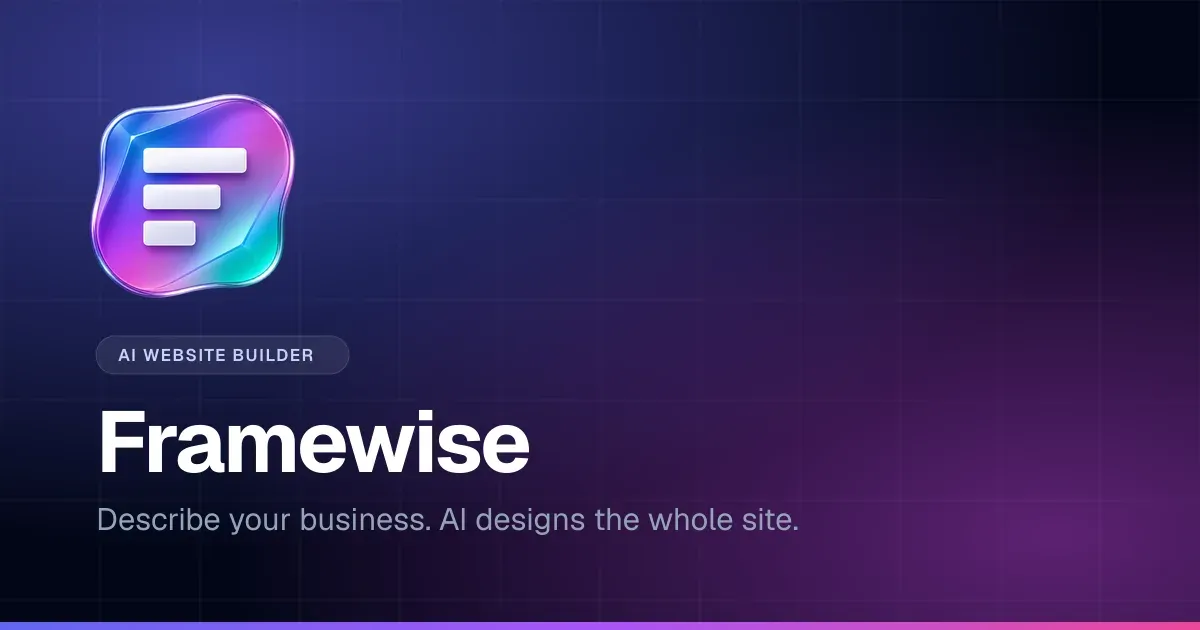
FramewiseAI website builder: describe a business, get a finished site
Challenge: Small businesses need a professional website without hiring a developer, but most builders hand them a template marketplace and leave the structure, copy, and design decisions to them.
Read the case study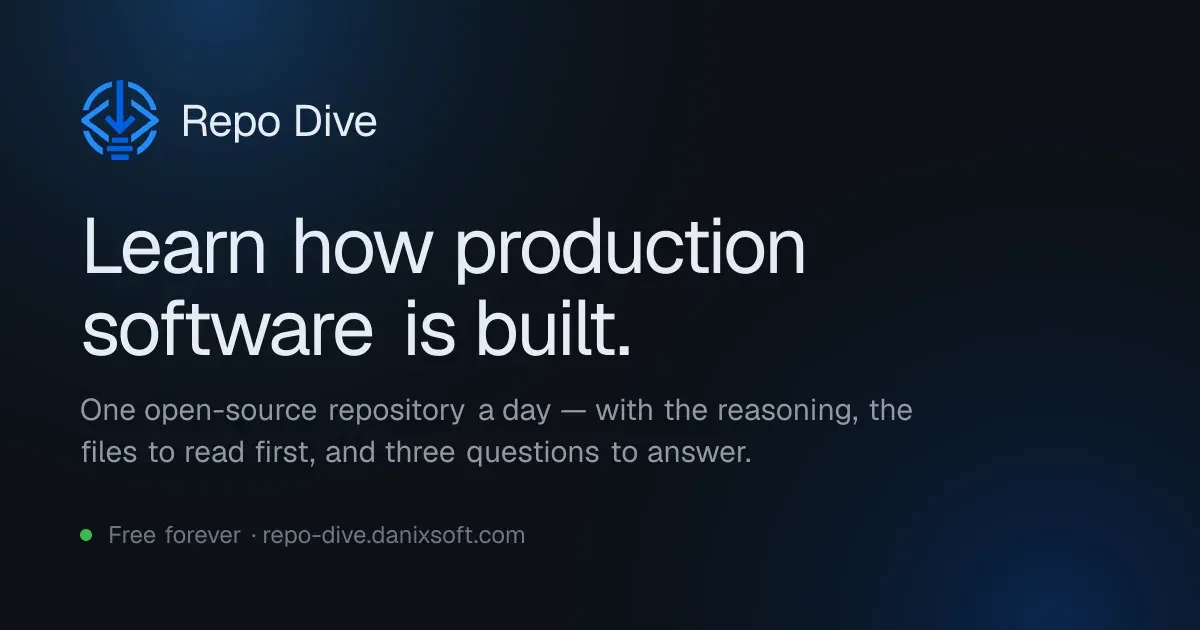
Repo DiveA daily training system for reading production code
Challenge: Developers who want to learn from real-world code have no structured way to do it. Browsing GitHub Trending is easy to skip, and an early version of the product picked repositories at random, so what someone had already studied never changed what came next.
Read the case study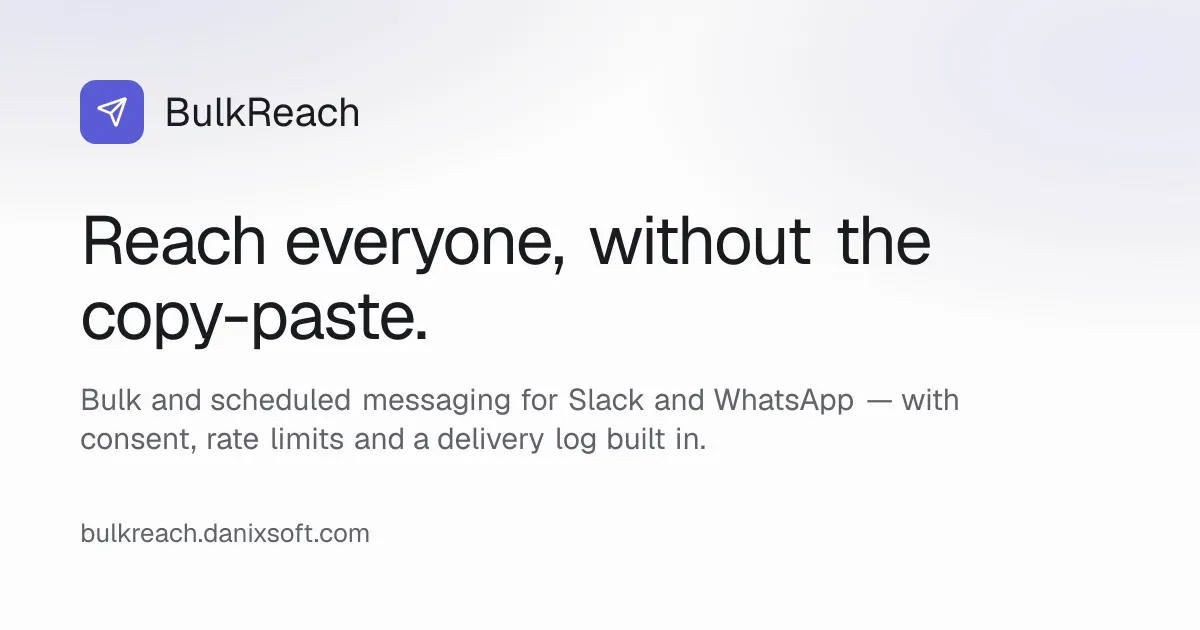
BulkReachMulti-tenant bulk and scheduled messaging for Slack and WhatsApp
Challenge: Teams that announce to many Slack channels or WhatsApp contacts need sends that respect rate limits, survive timeouts, keep each customer's data isolated, and never message people who have not opted in.
Read the case study
Pricing
What projects typically cost
Typical starting points, not quotes. Final pricing depends on scope and is fixed in writing after a discovery call.
MVP / Launch
from ~$3k
Typically 4–8 weeks
Validating an idea, a first release for early users, or a single focused AI feature.
- Discovery call and written scope
- Core user flows, auth, and an admin view
- Two-week sprints with working demos
- Deployment and 30 days of post-launch support
Product / Growth
~$10k–$30k+
Typically 2–4 months
A production SaaS or web/mobile product with billing, integrations, and dashboards.
- Architecture and data-model specification
- Web and/or mobile clients plus API
- Third-party integrations (payments, CRM, messaging)
- Automated tests, CI/CD, and monitoring
Scale / Enterprise
~$30k–$60k+
Typically 3–6 months, often phased
Legacy modernisation, multi-system platforms, AI transformation, or a dedicated team.
- Architecture review and phased migration plan
- Dedicated engineers working in your cadence
- Security review against an OWASP checklist
- Documentation, runbooks, and knowledge transfer
Ongoing: support & maintenance retainer from $600/month · fractional cto from $2,000/month.
How we engineer
The unglamorous work done properly
Review, tests, pipelines, monitoring, and documentation are part of every project — not extras you have to ask for.
Architecture written down first
Data model, API design, and infrastructure plan agreed in a written specification before code is written.
Every change reviewed
Pull requests are peer-reviewed and pass automated checks before they reach the main branch.
Automated tests
Unit and integration tests on business logic and APIs, plus manual testing on real devices for mobile.
CI/CD from the first sprint
Lint, test, build, and deploy pipelines (usually GitHub Actions), so releases are routine rather than events.
Next step
Tell us what you are building.
A free 30-minute discovery call, then a written scope and a fixed-price quote — before you commit to anything.